R.C.C Structure Construction — Strength, Durability, and Design Precision
Meta description: Reinforced cement concrete construction remains the backbone of durable, code-compliant buildings. Learn how IDD Infra approaches R.C.C structure construction for residential, commercial, and industrial projects.
Reinforced Cement Concrete (R.C.C) has been the standard for durable construction for over a century, and for good reason. By combining the compressive strength of concrete with the tensile strength of steel reinforcement, R.C.C structures deliver the stability, durability, and design flexibility that most buildings — from residential complexes to industrial facilities — depend on.
At In Depth Drill & Infra Services (IDD Infra), R.C.C structure construction is one of our core capabilities, built on the same engineering discipline that runs through our foundation, groundwater, and utility work.
What R.C.C Construction Involves
Structural Design Every R.C.C project begins with structural engineering that accounts for the building’s intended use, load requirements, soil conditions, and local building codes — ensuring the design is sound before construction begins.
Reinforcement Detailing Steel reinforcement bars are placed according to precise engineering specifications, positioned to handle tensile stresses that concrete alone cannot resist — a critical factor in structural longevity and safety.
Formwork and Concrete Placement Accurate formwork construction and careful concrete placement and curing ensure the finished structure meets design strength requirements and maintains dimensional accuracy throughout.
Quality Control From material selection to curing conditions, consistent quality control throughout the construction process is what separates a structure built to last from one prone to early deterioration.
Why R.C.C Remains the Standard Choice
- Durability — R.C.C structures withstand weather, load stress, and time far better than many alternative construction methods
- Fire resistance — concrete’s inherent fire resistance makes R.C.C a safer choice for many building types
- Design flexibility — R.C.C can be molded into virtually any structural form, supporting complex architectural designs
- Cost-effective longevity — while initial costs may be comparable to alternatives, the reduced maintenance and extended lifespan of R.C.C structures often makes it the more economical choice over time
Where R.C.C Construction Fits
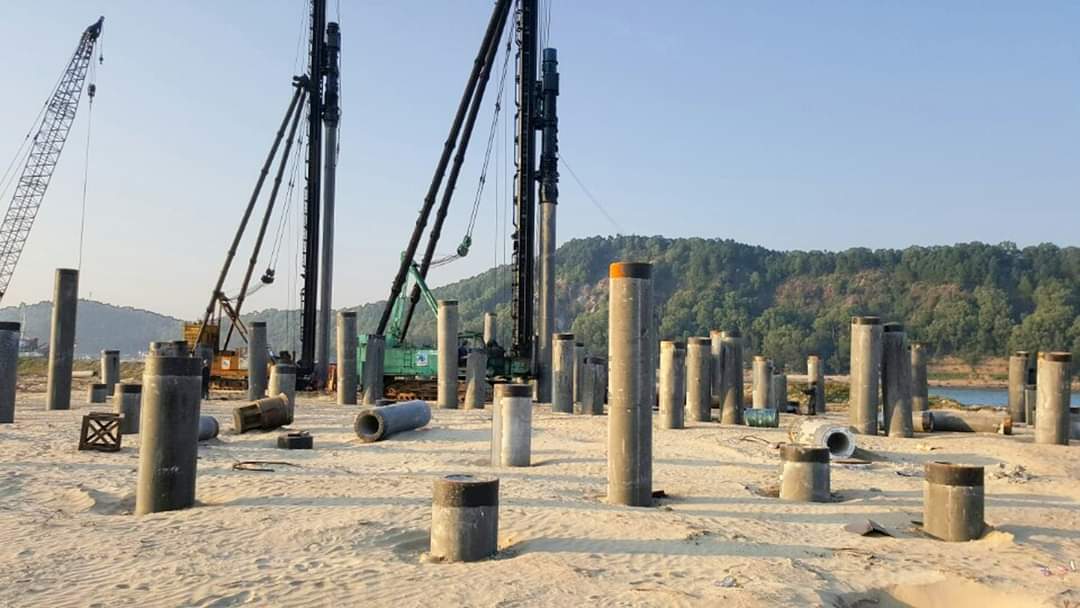
R.C.C structure construction typically follows piling and foundation work, forming the main structural framework of a building. From there, it connects directly into MEP (Mechanical, Electrical, Plumbing) work, which integrates the building’s functional systems into the completed structure.
Built on a Foundation of Engineering Continuity
What sets IDD Infra apart is that the same technical team overseeing your groundwater assessment and piling work also carries that site knowledge directly into structural construction. Under the direction of Ashraful Abedin, B.Sc in Civil Engineering, this continuity reduces the risk of design conflicts or coordination gaps that often arise when foundation and structural work are handled by separate, disconnected contractors.
Whether you’re constructing a residential building, commercial complex, or industrial facility, R.C.C construction done right is what ensures your investment stands strong for decades.
Contact us: In Depth Drill & Infra Services Phone: +88 01816-306236 / +88 01990-499455 Email: idd.infra@gmail.com Website: iddinfra.com

Leave a Reply